
Enough
On goals, leisure, & why I almost missed the reefs

A few weeks ago, Corey asked if I wanted to go snorkeling & exploring the local island, & my response told me that something was severely out of whack.
I told him no.
Instead of enjoying our time in Highborne Cay to its fullest, I was going to sit on the boat & work alone. Nothing urgent, though — just another pile of hours toward a stack of ambitious, open-ended goals.
In addition to my goal of sailing around the world, I’m working on other big projects, like building a thriving coaching business & successful newsletter.
Here’s something long-time readers of Radical Paths will know about me already:
I get really obsessed when I have a goal.
And why wouldn’t I?
Goals are how I got to where I am today, having sailed 3,500 miles since leaving the docks in North Carolina last June. Goals are how me — or anyone else — gets something they didn’t previously have before. Goals are the most powerful thing on Earth, right?
Wrong.
I mean, I’m wrong.
Goals are also how we start to lose our way.
In the past few weeks, I realized something important:
I had changed faster than my goals.
We’re not our goals. We’re human beings with other needs.
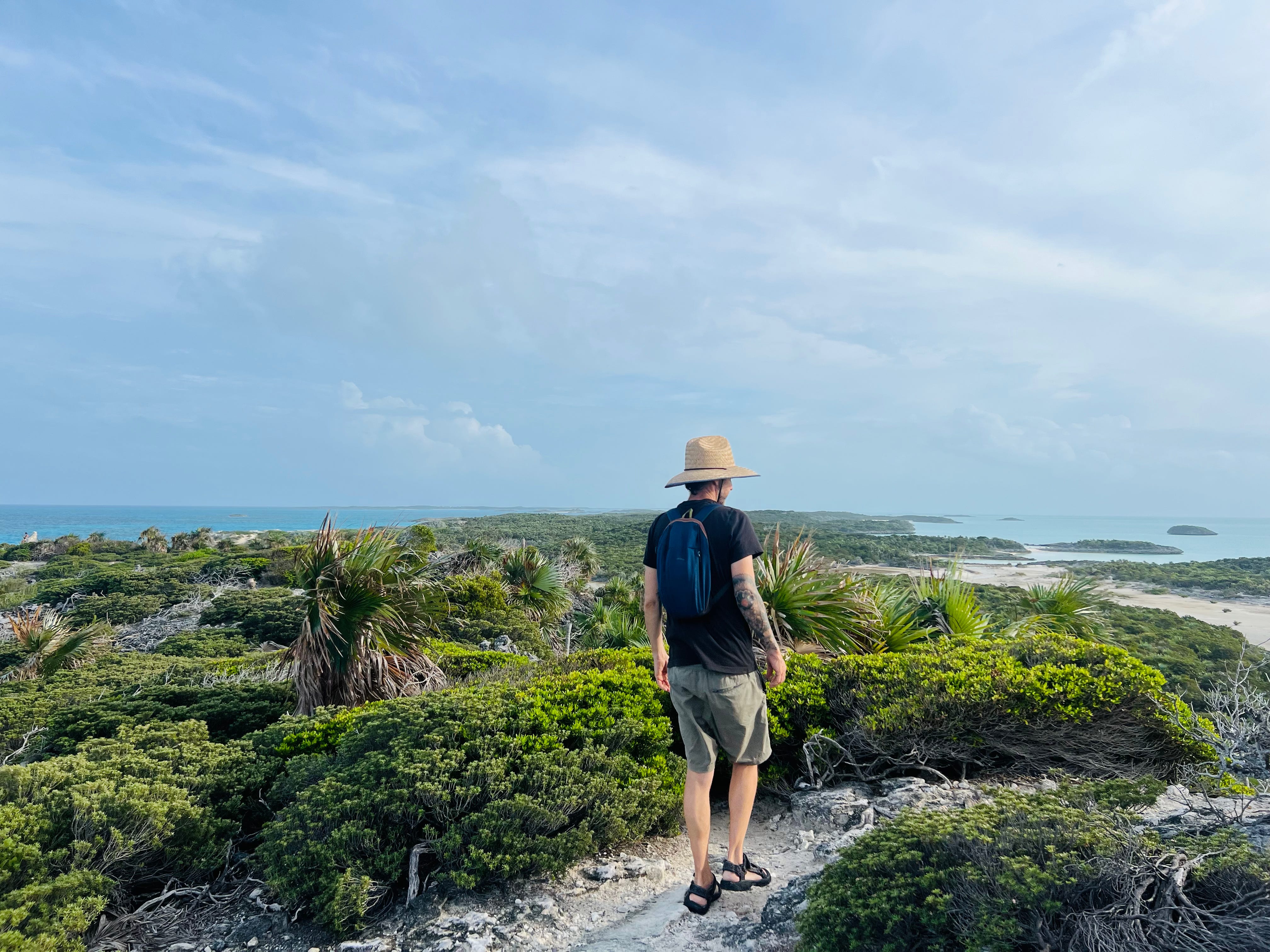
My goals were keeping me from enjoying the spectacular now.
And that needed to change — urgently.
When Goals Stop Serving A Good Life
When I said no to exploring that reef in Highborne a few weeks ago, I was really saying no forever. We were planning to leave the following day & that was my only chance.
But I felt like I needed to say no or else I’d be saying no to my other goals.
Wrong again.
I’d have plenty of chances to keep working toward my bigger goals.
Plus, even if I went snorkeling, I was still working toward bigger goals. Those things weren’t mutually exclusive. It was all about compartmentalizing.
It was all about choosing a sustainable way of life.
But that day, I looked at my life & I was confused. I had too many damn goals.
Sailing. Managing a sailboat & taking care of her crew. Meeting new & interesting people. Experiencing new nature & towns. Writing my weekly newsletter. Short-form posts on Substack & LinkedIn. Coaching. Learning entrepreneurship. Showing up well for the people around me.
None of this felt wrong per se.
It was just impossible to prioritize.
But sailing life isn’t going to work long-term if I don’t make time to savor all the opportunities as they come. Working nonstop was never the point. In fact, one of the reasons I pursued a life at sea was that I was tired of having my life structured around work.
I had given up too much freedom.
I had chained myself to my desk.
And I had become resentful.
So why did I do it all over again on my sailboat?
The 2 explanations I have are muscle memory & fear.
Why “More” Never Feels Like Enough
It might be surprising to people that even with no boss, living on a sailboat in the Bahamas, & not immediately being strapped for cash, that I was still finding myself on the verge of burnout.
But that’s what was actually happening on the day I said no to exploring those reefs in Highborne.
I’m a super driven person & that has taken me far in life. It’s how I’ve stayed sober for 18 years & counting. It’s how I went from community college to earning a PhD in biological science research from Harvard. It’s how I got my dream job. It’s also how I’ve sailed 3,500 miles, gained dozens of paying subscribers, & began working with clients as a newbie coach.
But my tendencies to strive (always MORE!) are partly due to my conditioning by my macro environment — and I know I’m not alone.
In the short book, The Burnout Society, Byung-Chul Han argues that this isn’t an individual failure but a cultural one.
From a young age, we’re asked what we’re going to be. We’re told we can do anything. So we maximize ourselves — constantly. We always need to be productive. And nothing is ever good enough.
Han argues that this constant self-optimization leads to shallow focus & eventual exhaustion. It’s a regression as a species rather than progress.
In other words, we stop marveling at the way things are — only what they’re not.
I thought moving onto a sailboat would help me chill out. I thought it would force me to focus more on the spectacular now. But instead, I brought many of these same tendencies with me. And surrounded by this much beauty, that’s not acceptable.
My lust for more led me to saying no to the wrong things at the wrong times.
Much of my preoccupation with goals came from a pure place. I’m genuinely curious about what else is possible. But that trade isn’t always worth the cost.
In college, I traded a vibrant social life for a perfect 4.0.
In my career, I traded authenticity & adventure for stability.
And now, in sailing, I risk trading a once-in-a-lifetime experience for more — just for its own sake.
The truth is, I don’t actually need more right now.
I have some runway I saved before quitting my job. I’m earning a bit from this newsletter. I got my first coaching client. Life on our sailboat has finally become more affordable.
The feeling that I need more is because I hadn’t bothered to define enough.
In The Pathless Path, Paul Millerd says: “If we don’t define ‘enough,’ we default to more.”
He goes on to argue that it’s easier to accept the economic logic of profit-seeking organizations — where “more is always better” — & apply it to our own lives.
This floored me & helped me recognize I hadn’t thought about this in structured way.
So here’s my idea of “enough”:
Enough is living in alignment with my deepest values while meeting my basic needs
Enough is trusting that community — friends, family, & even like-minded strangers — would help if I ever fell short
Enough is meaningful work done with depth & care, within time boundaries I set for myself
Enough is creating things that help people think differently or live better
Enough is knowing when chasing more costs me something that matters more
Enough allows me to say no.
Question for you: How do you know when you have enough? How do you know when to say no?
I’m still learning this myself, but I’m curious about your answer.
Email me or leave a comment. I’d love to know.
Leisure Is Not Laziness
For much of my adult life, specifically after I started pursuing my big career goals, I wished I could be more of a robot. I wanted to power through exhaustion & override my desires & limits in service of my wildly ambitious goals.
At Harvard, this led to panic attacks. I started Lexapro. I kept pushing. And I was rewarded with a PhD.
I knew deep down that wasn’t the life I wanted. That’s one reason I chose a government job with defined hours. But over time, I drifted back into intensity & accumulation.
More responsibilities.
More expectations.
More goals.
But what about my way of life?
In On the Shortness of Life, Seneca describes people who cannot stop working — even when they are successful — & grow resentful of every moment of their lives. Not because they lack achievement, but because they never give themselves time to live.
Even in old age, they cling to preoccupations instead of leisure.
This is normalized now — especially in the U.S. People will praise you for your work ethic & stamina, even into your 70s & 80s. But Seneca would say the cost is that life slips by unnoticed.
“You’ve been preoccupied while life hurries on; death looms all the while, and like it or not, you have to accommodate it.”
That line hit me hard.
Today, the boundary between work & leisure in my life can easily become blurry. Sailing, writing, helping others — all of it can feel joyful. And all of it can slowly turn into work.
After a lot of reflection, these are some personal guidelines I’m experimenting with to guide my search for leisure:
Time for philosophy, personal writing, & unhurried conversation
No preoccupations beyond the present moment
No evaluation of output, metrics, or monetization
I’ve also committed to one full day off per week — each Monday.
The rules for this “Day of Leisure” are simple:
Be ruthlessly present
No posting or client work
Follow curiosity for its own sake
Corey and I also decided that when weather allows, we’ll have at least one off-boat adventure per day. Even something small. The more unplanned the better.
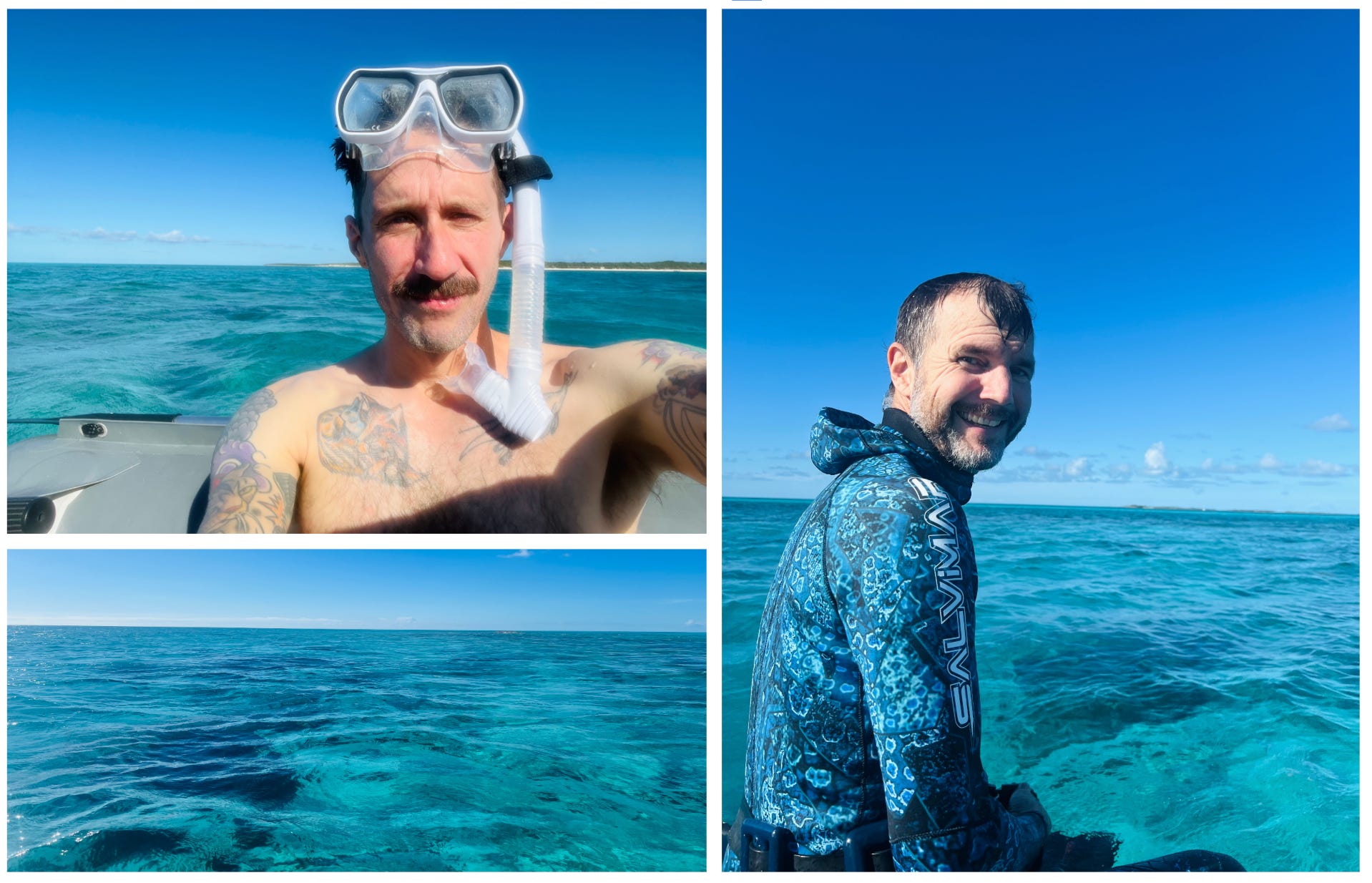
For example, I’m saying yes to the reefs.
Living With the Driven Part of Me
The last few weeks have been about understanding how to live with the driven part of me without letting it take over.
Being driven isn’t the problem. Having goals isn’t either.
The problem is being controlled.
When I said no to snorkeling, I was shocked enough by my response that I became willing to reassess everything.
That’s when it became crystal clear:
I had changed faster than my goals.
Even “sailing around the world” belongs to an earlier version of me — someone sitting at a desk imagining freedom. The version of me now knows what freedom costs & what it gives back in return.
I feel a deep unease anytime I contort myself to meet a goal that no longer fits who I am.
I’m not sure where I’m heading, or how I’ll change, & that’s the point.
Having a vision matters. Working toward something meaningful matters. But being ruled by goals? That’s misery.
The people I admire most aren’t the ones chasing or attaining the biggest outcomes. They’re focused on a way of life aligned with their values & they adjust when they learn something new about themselves — including that they want something else.
I don’t need to sail around the world, build a massive audience, or have a waiting list of clients to be successful.
I’m a success because I left the dock.
Because I try & keep putting myself out there.
Because I’m building a new relationship with fear & the unknown.
Because I feel alive, I’m helping others, & I have my basic needs met.
A successful newsletter, to me, is a community of people thinking seriously about how to live well.
A thriving business is one that supports my life, help others in important ways, & lets me feel like I’m doing meaningful work.
This is enough.
So yes — I changed my mind about snorkeling that day.
I said yes.
And I didn’t miss anything.
If you’re navigating a transition of your own — career, identity, pace of life — this is exactly the kind of work I do with coaching clients. Just thoughtful, honest conversations about what “enough” looks like for you.
You can learn more about my coaching practice here.
Until next time,
—Cory
P.S. Want to support this work directly? Either subscribe or buy me a coffee — every bit helps keep us sailing and writing.

I’m so glad you said yes and noticed this pattern. This is the undoing of your societal conditioning. It will take you many more months, if not years, to undo most of it. Trust me, I understand full well what you are going through. Just keep making sure you enjoy the places you visit. Even if you can return to them someday, they will never be the same.
Cory... This landed hard — especially “I had changed faster than my goals.” That’s such a clean, unsettling truth, and one most driven people don’t catch until they’re already resentful or numb.
I recognize that moment you describe — saying no to the thing that was the whole point — and realizing the cost only afterward. It’s sneaky how easily “freedom” turns back into self-imposed structure if we don’t actively protect leisure as something sacred, not leftover.
Defining enough feels like the real work here. Not as a finish line, but as a living boundary that needs revisiting as we change. I love that you’re treating it as an experiment, not a declaration.
And yes — saying yes to the reefs feels like a quiet rebellion against an older self who thought aliveness had to be earned.
Thanks for writing this one. It feels like a permission slip a lot of people don’t know they’re allowed to write for themselves.
Kelly 💛