
The Most Self-Sufficient Human Was Never Absolutely Alone
How Dick Proenneke — Alaskan wild-man extraordinaire — channeled the critical power of community

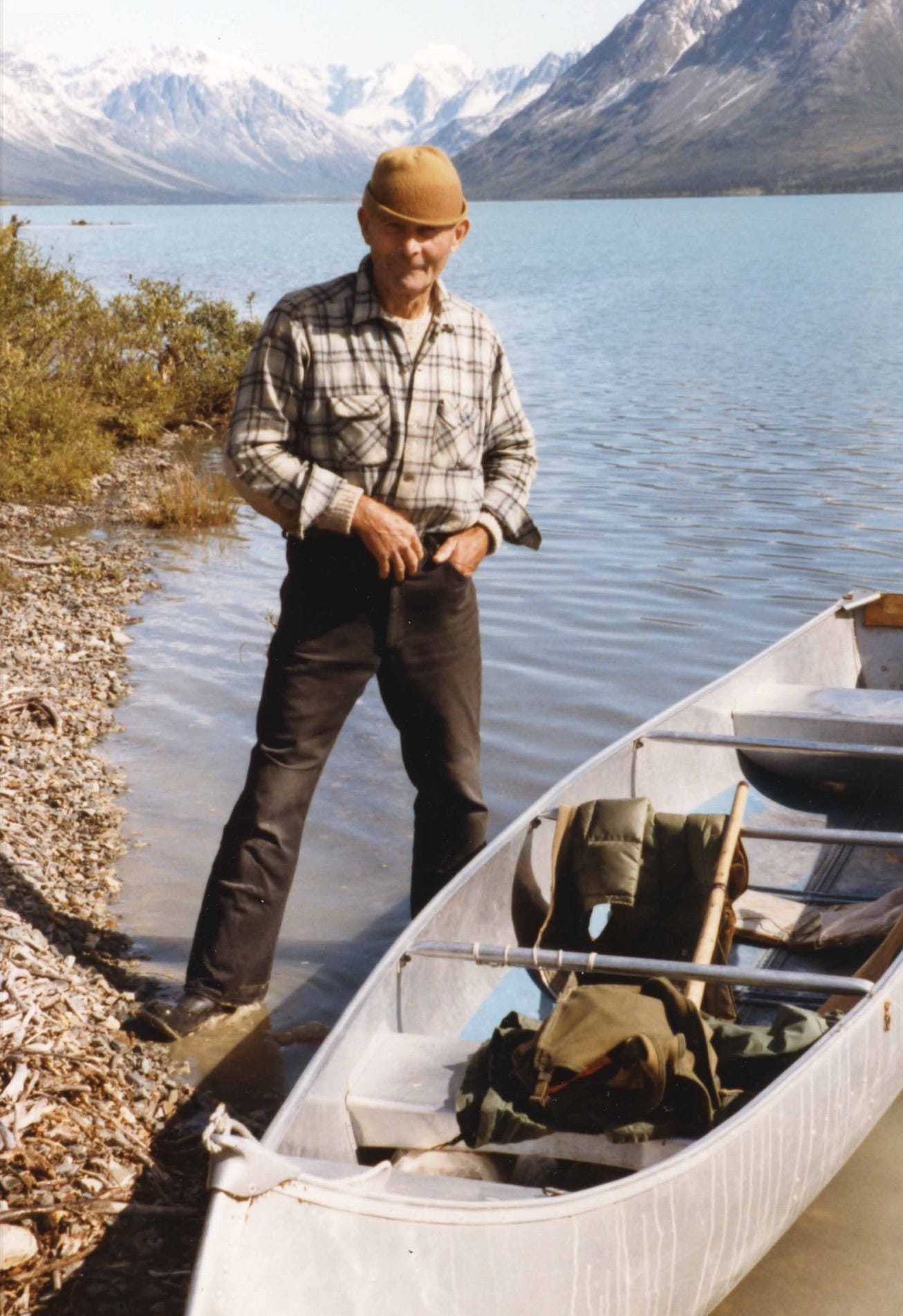
It might feel like life isn’t long enough to take another major new fork in the road. How’re we supposed to learn the necessary skills, make a cozy home in a new place, and discover fellow wanderers who get us?
We may doubt whether we can truly construct the life beyond our wildest dreams — especially “later in life.”
ENTER DICK PROENNEKE (pronounced: Preh-neck-ee).
You may have heard of him.
He’s famous for moving solo to the Alaskan wilderness at 51 years old and building himself a log cabin with only basic hand tools. This is where he lived (mostly) alone for 30 years.
Beyond his extreme self-sufficiency, and his long distance from civilization, he had some secret assets that contributed greatly to his success. Even Dick Proenneke relied on his community.
Dick Proenneke was a radical badass
If Instagram or YouTube were around back then, we’d all know his name (and how to pronounce it).
Thank goodness, he was a prolific photographer and left behind over 100 pounds of journals. This meant his untamed stories and inspiring thoughts were well-preserved.
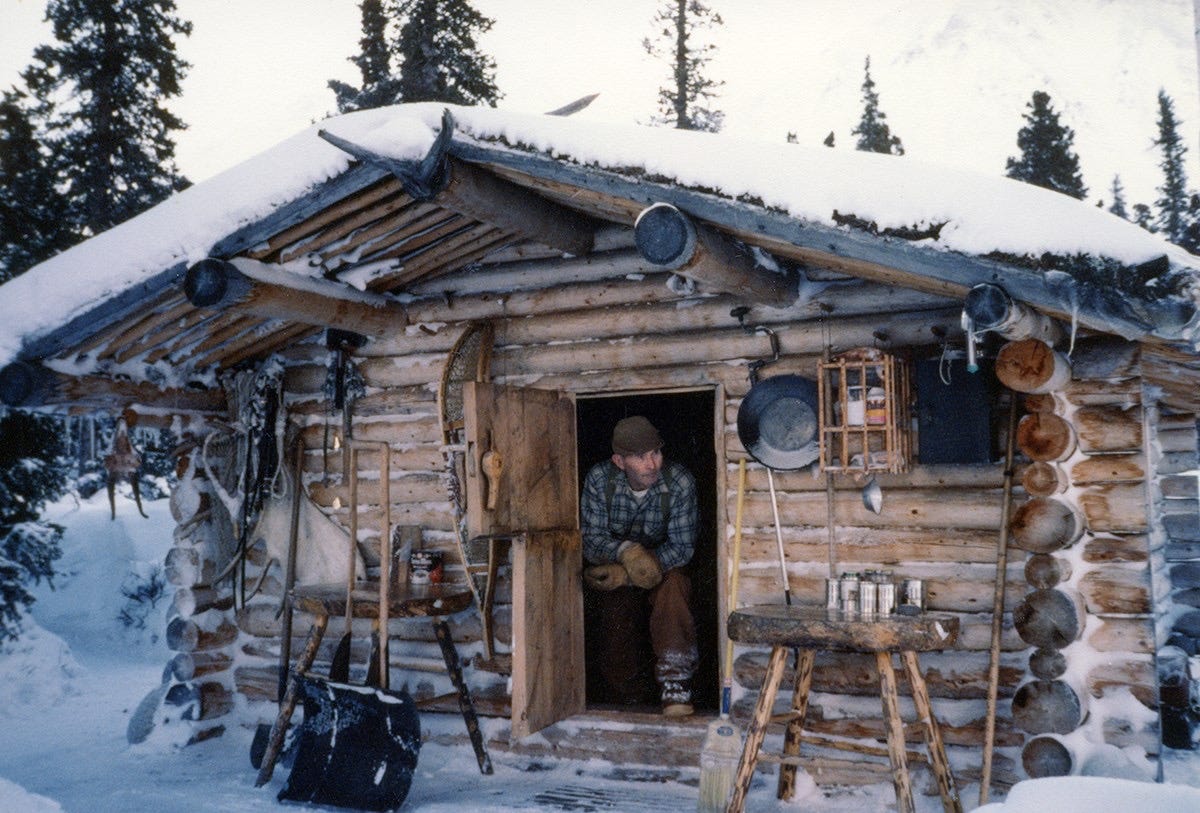
In 1967, Dick Proenneke started building his Alaskan cabin 60 miles away from the nearest civilization. He chose a plot of land on the roadless lakeshores in Twin Lakes.
At an age when some self-identify as “over the hill,” Dick Proenneke took a different attitude. At 51, he was just about to enter the life that he long desired — one of maximum adventure, passion, & freedom.
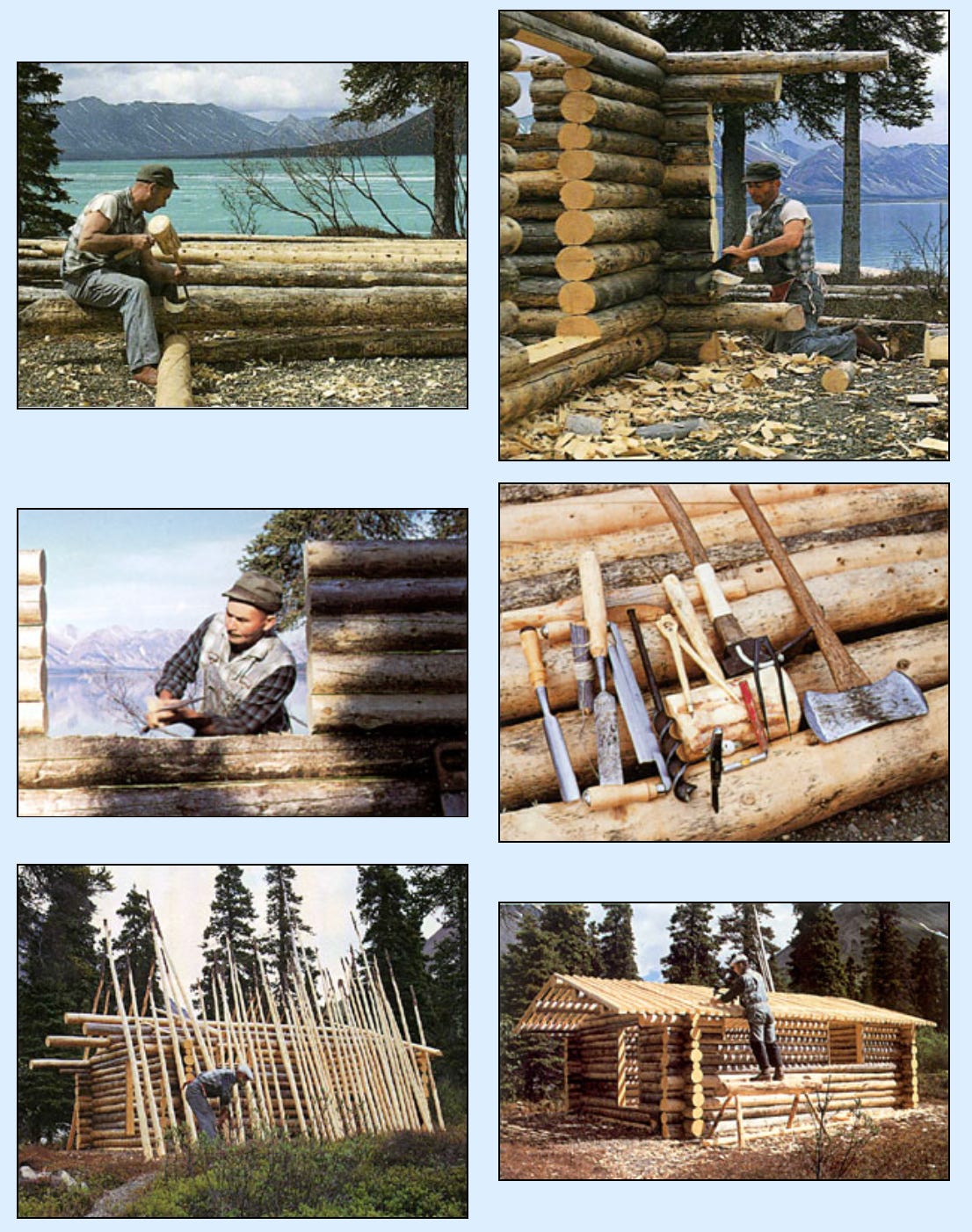
Standing at 5-foot-8-inches tall, Dick Proenneke cut and peeled all the necessary spruce logs himself in the fall.
The following spring, he built his 11-by-14-foot home — also by himself. He covered his roof with spruce limbs, sod, & moss. He built his hearth & chimney with rocks from the lakeshore. His floor was made with gravel from a nearby stream.
Can you imagine a more self-sufficient human?
There were multiple documentaries about him, including the dazzling Alone in the Wilderness (though, sadly, I’ve only seen snippets on YouTube).
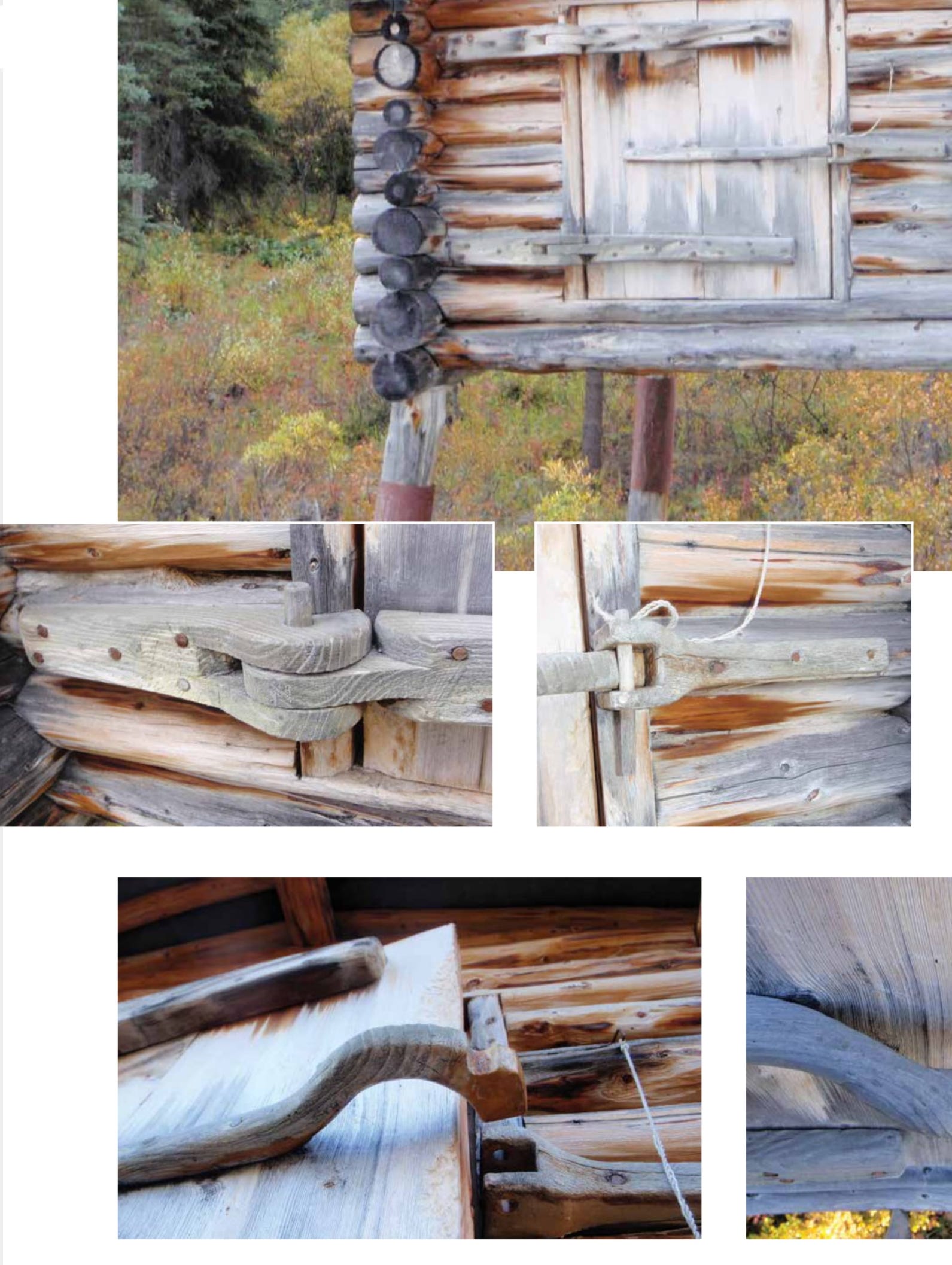
He also created a cache to keep the animals out of his supplies. One of my favorite details about Dick Proenneke’s life in Alaska is that he engineered original designs for hinges & latches completely out of wood. No metal involved. As if you needed anymore convincing of his self-sufficiency!
Dick Proenneke is a legend.
He’s the 20th century’s Thoreau. However, in my opinion, he’s even more of a radical badass.
Not to take anything away from Thoreau and his cabin on Walden Pond, but he only lived there for 2 years and was never more than a couple miles from town. He was also in his late 20s!
Dick Proenneke lived in his cabin in the brutal Alaskan wilderness until he was 83 years old. The only way for him to leave was by plane. And it was also the only way for others to reach him.
Yet, the detail I love most about Dick Proenneke is that he was never absolutely alone. He showed that his trick to self-sufficiency was to commune with fellow wanderers who understood and supported his extreme ways.
Not only is Dick Proenneke proof that it’s possible for a radical badass to find such community — he also figured out the right balance to maximize his vitality.
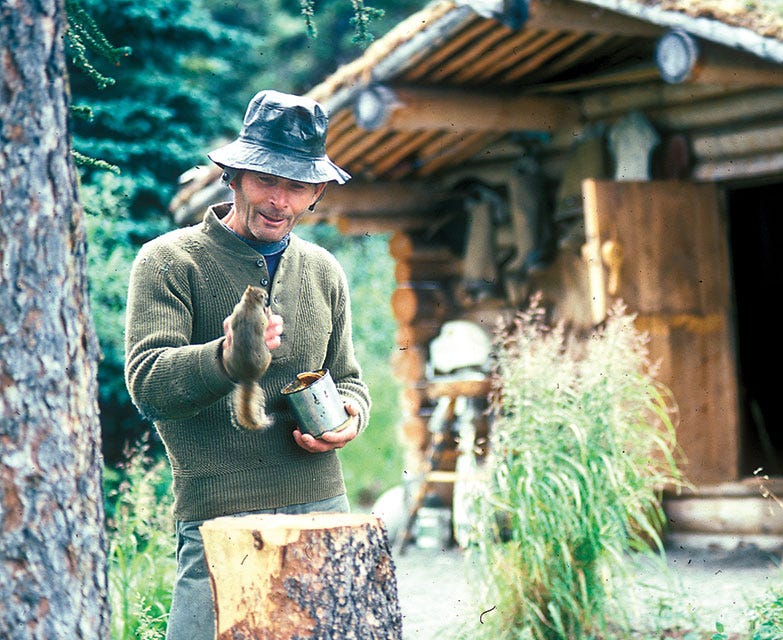
The genesis of Dick Proenneke’s radical path
In the 1930s, teenage Dick Proenneke first traveled to the West coast from Iowa.
Near the end of World War 2, while serving in the Navy, he got sick with rheumatic fever. He spent 6 months recovering in a hospital in San Francisco. He hated how helpless he was being sick. According to at least one telling, the stint in the hospital made him realize the importance of his strength and self-sufficiency.
He first visited a friend in Alaska, then he moved there full-time in 1950. He wanted to raise cattle on Kodiac Island, but that didn’t work out. Instead, he found a job as a diesel mechanic on a Navy base. He didn’t love it. But he worked there for 14 years and saved his cash.
He almost lost his vision after a freak accident on the job. This was a traumatic experience. He thought, “What if the greasy belly pan of a bulldozer had been the last sight my eyes ever witnessed?”
At that point, he started looking for a way out.
He soon moved to the roadless wilderness in Twin Lakes to build himself his famous cabin.
The only way to get supplies was by air from his friends.
“What was I capable of that I didn’t know yet?
What about my limits?
Could I truly enjoy my own company for an entire year?
Was I equal to everything this wild land could throw at me?
I had seen its moods in late spring, summer, and early fall, but what about winter?
Would I love the isolation then, with its bone-stabbing cold, its brooding ghostly silence, its forced confinement?
At age fifty-one I intended to find out.”
Dick Proenneke
Dick Proenneke channeled the critical power of community
I don’t want to take anything away from Dick Proenneke by saying he wasn’t completely self-sufficient. He survived dozens of Alaskan winters alone in a little cabin he built himself. He may have been in the top 0.001% of humans alive at the time in terms of self-sufficiency.
But he clearly found fellow wanderers who understood and supported him in his extreme ways.
These are a couple critical people who I’m sure Dick Proenneke would also want us to recognize:
1. Babe and Mary Alsworth
Babe Alsworth was a local bush pilot who delivered supplies to Dick Proenneke in his roadless cabin about 60 miles away. Babe would bring homemade caribou sandwiches made by his wife, Mary, as well as 50-pound bags of flour.
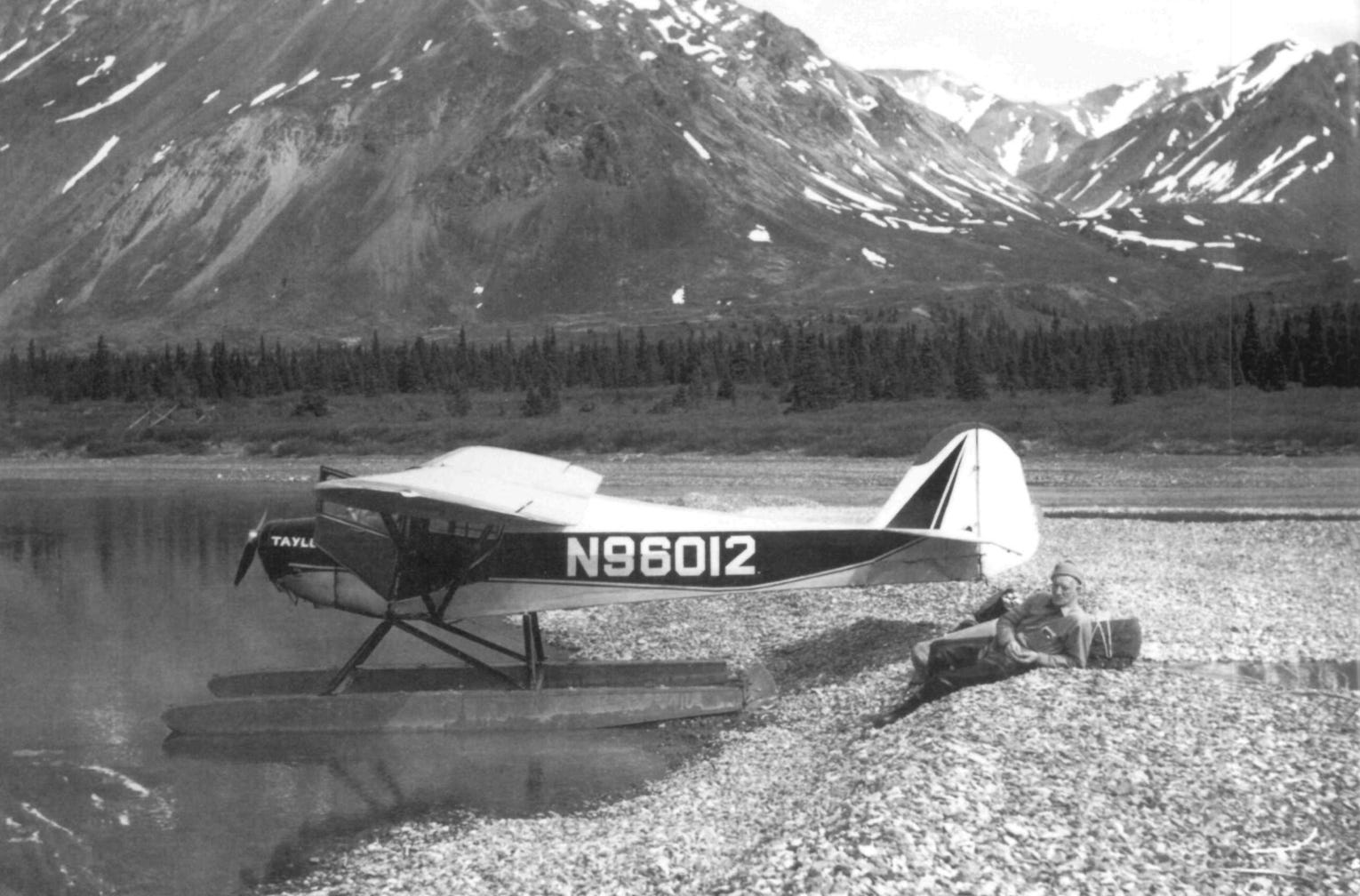
Mary also sent Dick Proenneke a sourdough starter. Dick Proenneke guarded that gem for 30 years, knowing its importance as fuel. He used all his supplies to make sourdough biscuits and flapjack sandwiches with peanut butter and onions. Sounds good if you ask me!
These rations would power his excursions through the countryside and during his canoe rides through the local waterways.
2. Helen White
Helen White is not part of the CliffsNotes telling of Dick Proenneke’s life in Alaska. However, as a fellow writer, I can’t skip over her significance.
Perhaps the only reason we’re talking about Dick Proenneke in so much detail today is that he filled 100 pounds of notebooks. He then published a best-selling memoir in 1973 called One Man’s Wilderness, which contained stories from his journals. This book made him a celebrity among people who were into that sort of thing.
But one of the main reasons we ever got the notebooks (or this Substack newsletter from yours truly!) was because of one person: Helen White.
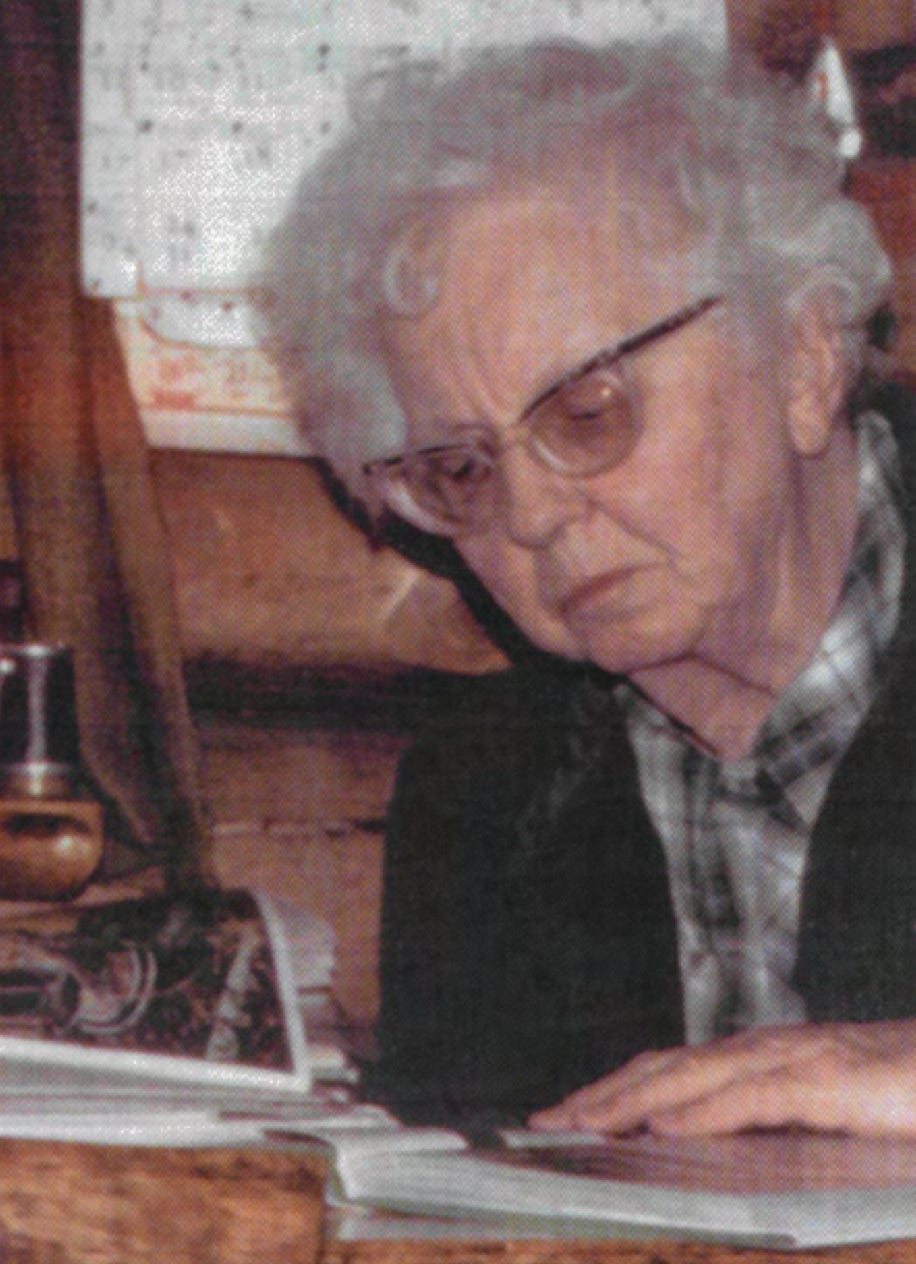
Dick Proenneke would send Helen his filled journals. Helen would put aside everything and read them straight through. She would then resupply him with more paper and ink. But perhaps most importantly: she’d encourage him to keep writing.
John Branson, the editor of More Readings from One Man’s Wilderness, spent time at Dick Proenneke’s cabin throughout the 1970s.
According to Branson, Dick Proenneke wanted any subsequent books published from his journals to be dedicated to Helen White for all these reasons.
Even as radicals, we need the critical power of community
I might connect with Dick Proenneke’s story so strongly in part because I’m about to embark on an adventure that most normal people would consider extreme. But like Dick Proenneke, I will never be alone.
Few happy radicals can live in complete isolation. We need community — even if it’s just a little bit! However, the trick is to find fellow wanderers who understand and support us despite — or because of — our extreme ways.
I’m beginning my wildest adventure after decades of wild adventures:
I’ll be living on a small sailboat with my husband & cat and sailing indefinitely around the world.
My husband and I will need to be mostly self-sufficient. As budget cruisers, we won’t have many modern amenities. We’re going to the most remote, desolate regions of the world, and there will be no one to fix our sailboat for us if/when she breaks down.
However, we’ll surely have people like the Alsworths and Helen White who will understand and support us. There will be other cruisers. We’ll also have internet and 100s of people within reach. Despite the enormous amount of self-sufficiency required, our network will be a big key to our success.
But also, we’ll need to ask for help, and take assistance, when we need it.
I’ve heard people who undermine Thoreau’s story at Walden Pond because he lived so close to town. They say he was inauthentic describing the importance of self-sufficiency and being alone in nature. But these critics are missing the point.
Sure, his cabin was a couple miles away from Concord, Massachusetts, where his family and friends lived. What’s wrong with that? He would frequently visit town for supplies, and engage in conversation with these people. But, as humans, this sorta community is non-negotiable.
Dick Proenneke would also regularly invite guests up to his cabin, and go down to the lower 48 in his little J-3 Piper Cub airplane to visit friends and family (before he crashed it).
This is how we maximize our vitality. We don’t get extra credit for making life any harder than it needs to be. Community is where we find strength, growth, and sustainability.
Dick Proenneke teaches us a lot, but one thing is that self-sufficiency is not about being absolutely alone. It’s about discovering the right equilibrium for ourselves. We may be on one end of the spectrum, and it’ll likely shift depending on where we’re at. Either way, we must prize the fellow wanderers who understand and support us living a life beyond our wildest dreams — at any point in our lives.
If you enjoyed my article today, please consider buying me a cup o’ Joe.
You can help sustainably power our adventure at sea — and around the world. Thanks for your support!

Cory, this piece spoke straight to my wanderer’s heart. You captured what so many miss about self-sufficiency — that it’s never really about isolation, it’s about equilibrium. Nigel and I live that tension daily as we slow-travel: the pull toward independence, the need for connection, the gratitude for those who “drop supplies” in their own way.
I love how you wove Helen White into Proenneke’s story — the quiet anchor behind the myth. Here’s to finding our own Alsworths and Helens out there. -Kelly
The guy was a legend for sure! This post keeps his legacy alive. Great read, Cory.