
Would You Push the Easy Button?
The fantasy of shortcuts — & how to choose the right ones

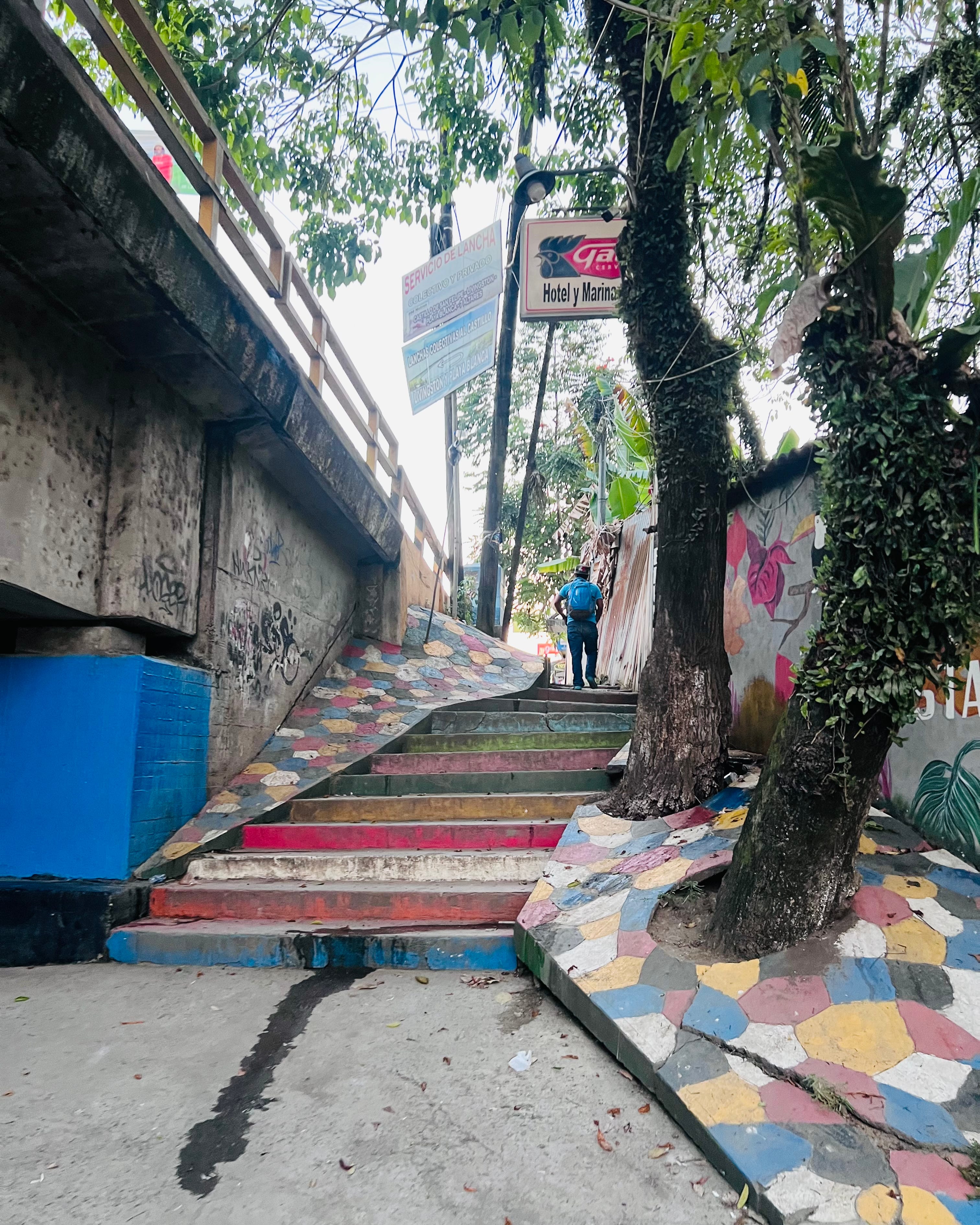
My first week in Guatemala has been full of confusion.
My high-school Spanish is rustier than the old anchor on our ramshackle sailboat when we bought her in North Carolina. Like those first weeks in the boatyard, I’m lost in translation, bumbling around every day. And after 20 months of the extensive refit & wild sailing that brought us to this moment, I’ve fantasized about exactly 1 thing that could make my life easier.
How much would I pay for a button that would make me instantly fluent in Spanish?
$500?
$5,000?
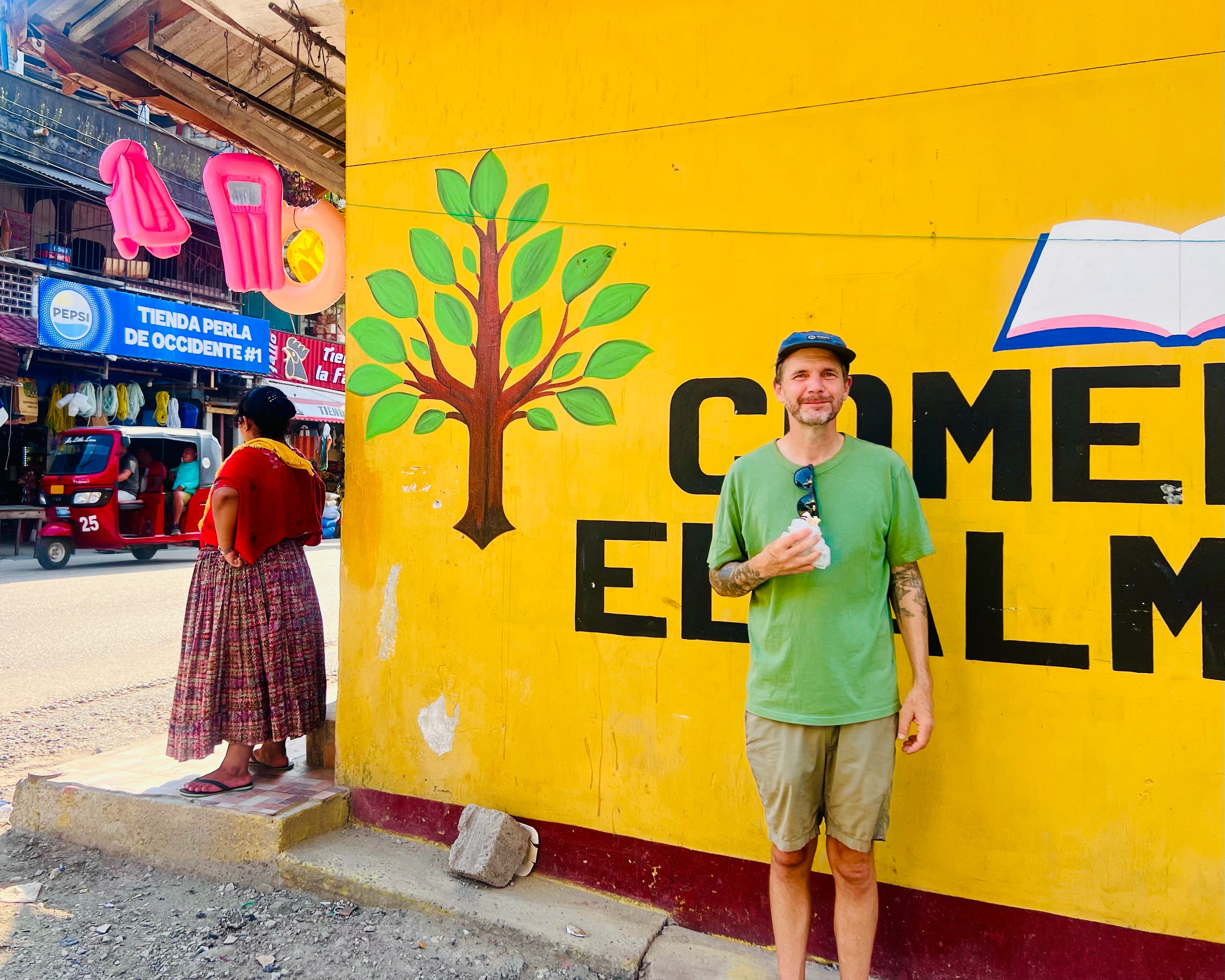
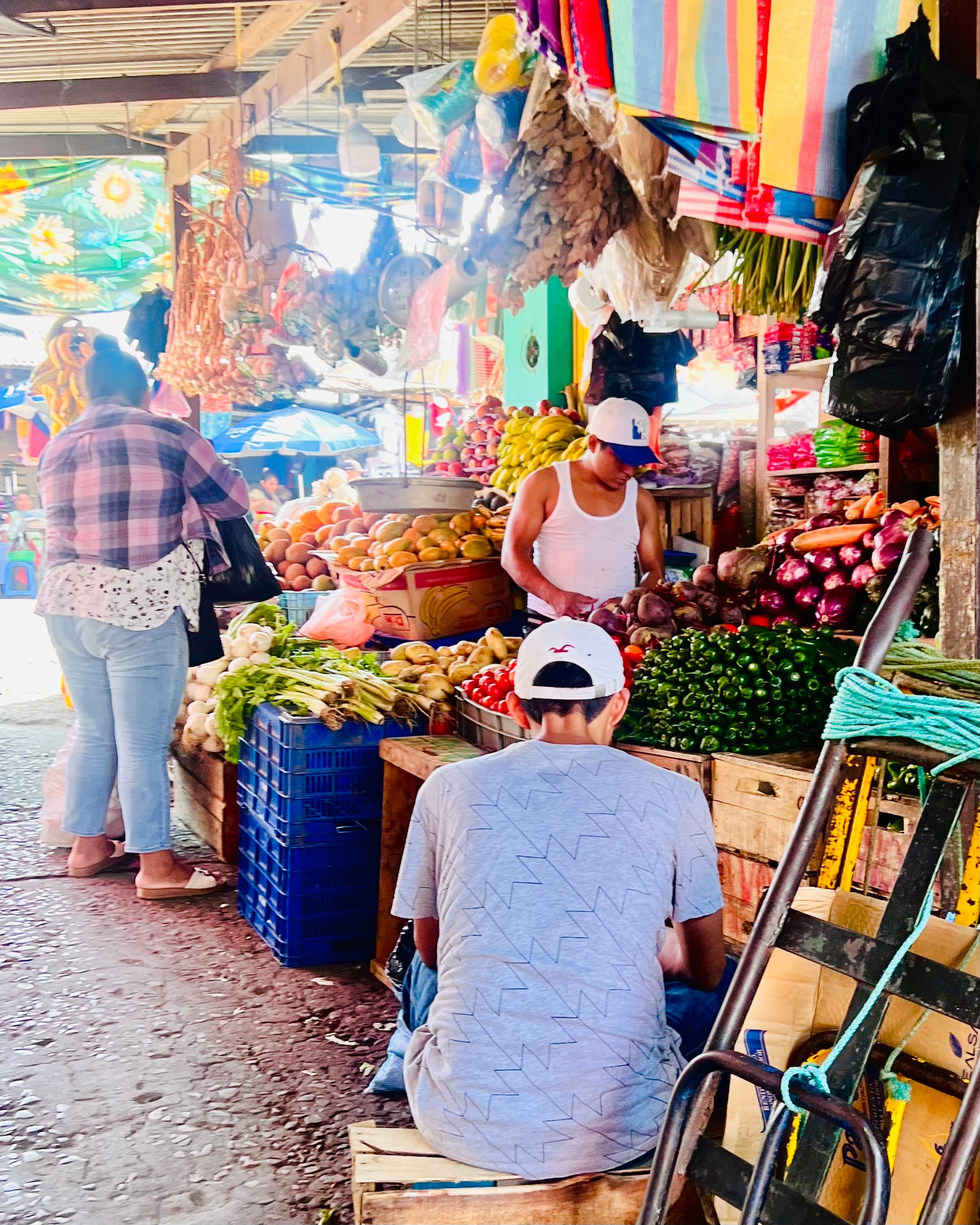
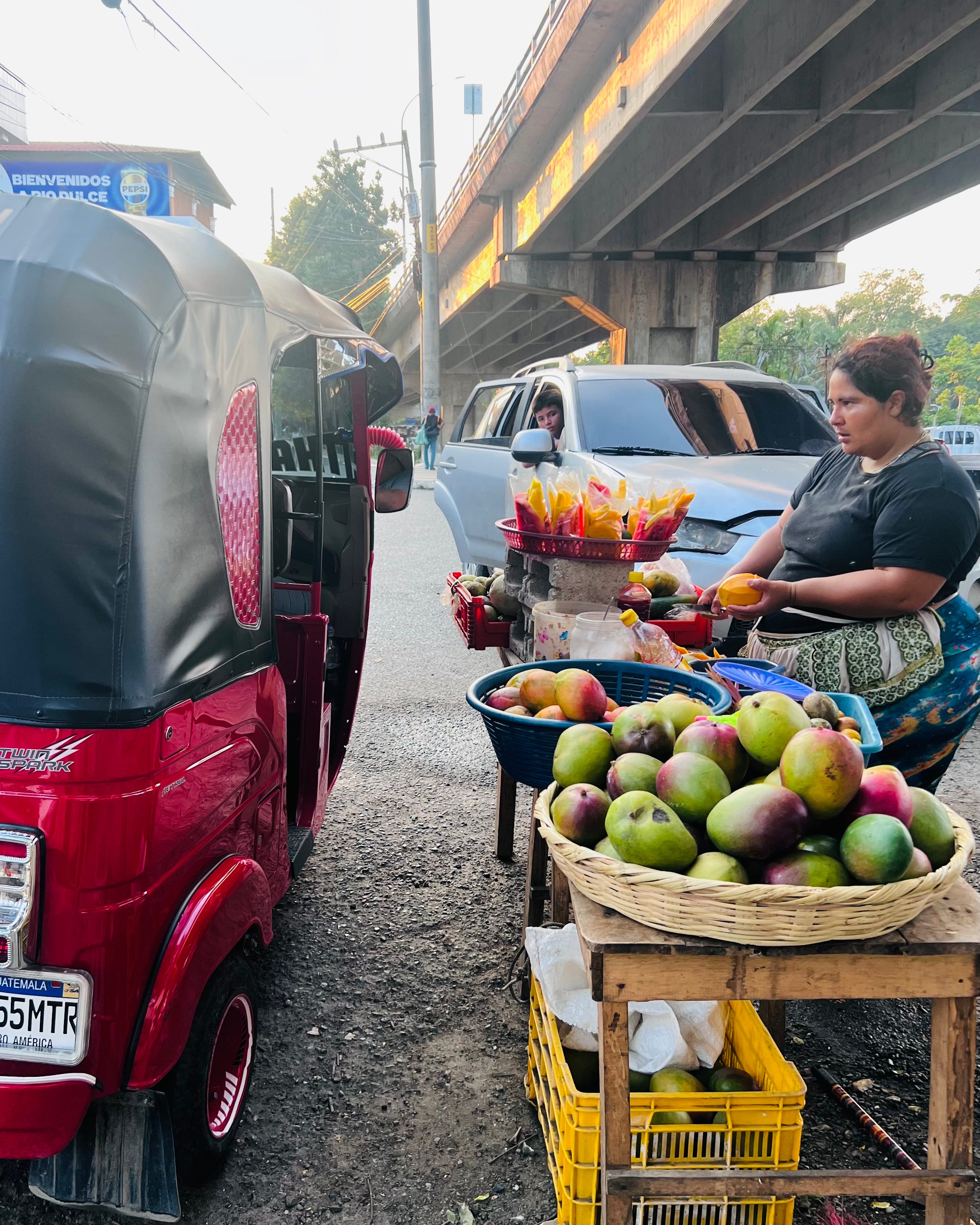
I’m still heading out every day to the bustling town of Rio Dulce, amongst the sizzling restaurants, colorful produce stands, & little shops — and as I fumble, hoping that I’m moving slightly more forward.
On Wednesday, I tried to order crispy quesadilla-looking things from a street vendor & I truly thought he understood me. Corey wanted one too. So I said “¡Dos, por favor!” Then we got 2 plates with sad-looking pieces of chicken on a single corn tortilla & a few pieces of macaroni salad. Better than nothing, but man I felt deflated.
Then, that evening, I kept studying.
My expat friend Travis told me even 7 words/day adds up fast. So I practice on my iPhone app after each sunset, alone on a dark pier at the marina so as not to offend my neighbors with my terrible pronunciation & those casino-like sound effects.
I keep thinking about that button, but the truth is I’d never push it.
I could’ve flown to Guatemala from Denver if I wanted the efficient route. I just found $200 plane tickets online! Eight hours with a stop in Orlando — not the nearly 2 years it took to navigate via sailboat.
But I didn’t want efficient. I wanted this.
The fumbling, the occasional embarrassment, the deflated feelings, the bland macaroni salad I didn’t order.
By now I’ve learned that the harder way is the 1 that changes you.
Spanish is going to be the same as anything else. I have these apps & an entire world to practice in every day, 1 day at a time, until I get better.
I wouldn't push that particular button.
But I'll admit — there are some buttons I’m good with pushing.
“Convenience is all destination & no journey.”
This is from a popular 2018 op-ed in the NYTimes by Columbia law professor Tim Wu.1
Wu described how developed societies operate with a sacred mantra: “Easy is better, easiest is best.”
But convenience, he argued, needs to serve something greater than itself. Otherwise it’s just more convenience — an endless loop with nothing worthwhile on the other end.
Wu observed that most people in Western countries, particularly the U.S., have traded convenience — like 1-click shopping or “plug & play” — for pursuits that should matter more, like ones that offer meaning & purpose.
On our sailboat, we need to crank up the anchor chain by hand, 1 foot at a time, every time we go sailing. And if we have 150 feet of chain in the muddy ocean floor, we are absolutely huffing & puffing by the time we walk back to the cockpit underway.
I can’t tell you how many times other sailors told us they’d never seen a manual anchor windlass. A dozen people at least have said, “We just push a button!”
But we had our system down & we didn’t need the $5,000 version of everything to make our sailing dreams come true.
I actually like the manual labor — at least the way we’re doing it on our sailboat. I’m doing it with Corey. It’s usually exciting and/or interesting. And it’s challenging in ways that are often insanely rewarding.
Wu’s essay hits different today, now that I’ve had a taste of a life not centered around convenience for its own sake — & I’m searching for what’s next.
Wu writes:
“Climbing a mountain is different from taking the tram to the top, even if you end up at the same place. We are becoming people who care mainly or only about outcomes. We are at risk of making most of our life experiences a series of trolley rides.”
But the question still remains: what do we want to struggle over & how do we use today’s technologies to help get there?
Up until this point, my identity has been formed largely by what I’ve struggled to achieve. Getting sober. Earning my PhD. Remaining happily partnered for nearly 18 years. Sailing 4,500 miles from North Carolina to Guatemala. Writing 80+ essays for this newsletter.
None of it was convenient. But none of it was harder than it needed to be either.
When we find the right tools that help us along our journeys, we should use them.
But we gotta choose deliberately.
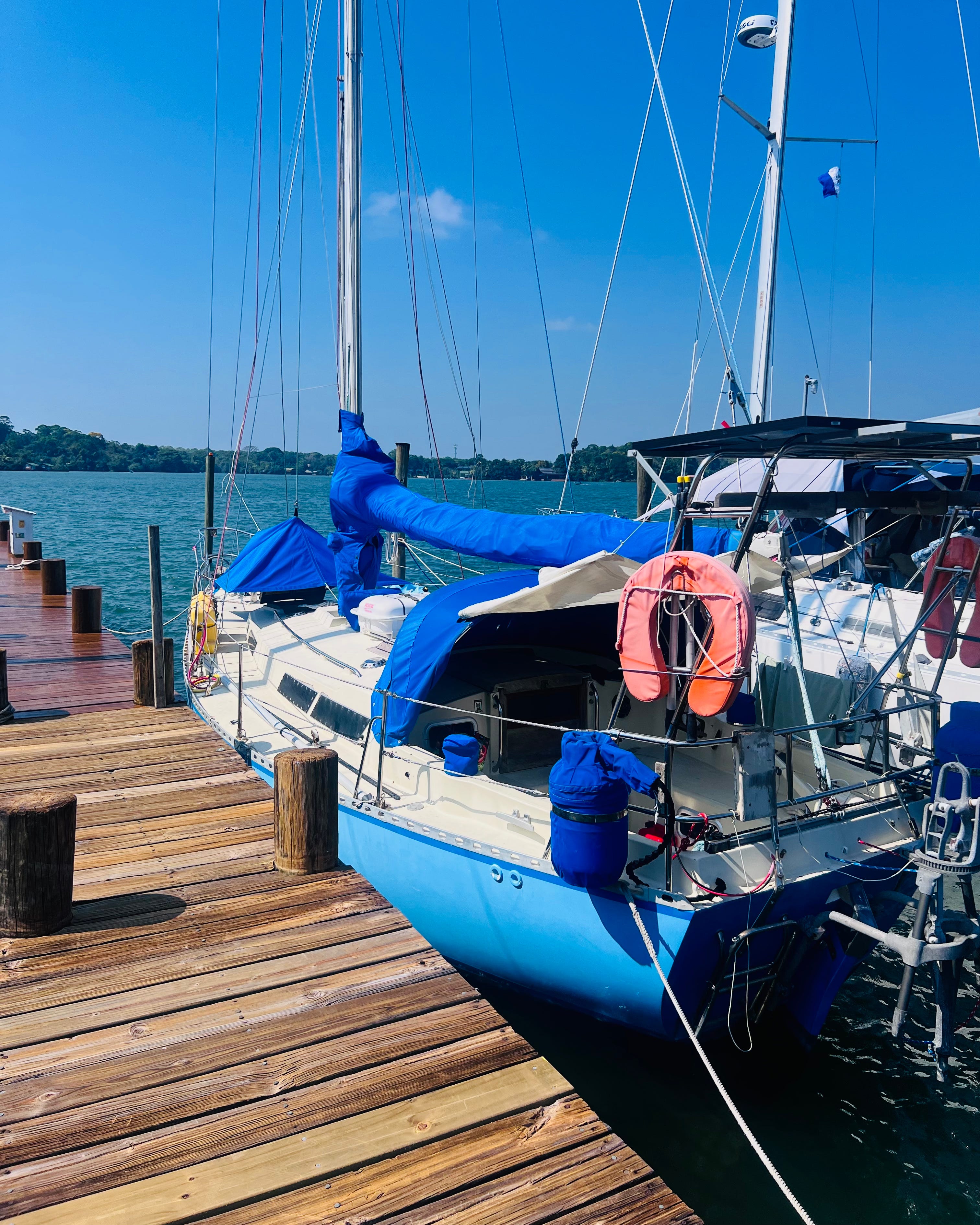
The conveniences we’ve embraced to get to Guatemala — GPS, satellite internet, & autopilot for steering the ship — were very intentional. They weren’t conveniences for their own sake. They were investments that we decided we needed — often after first trying to go without.
But we also chose the harder version of almost everything else. Partly for financial reasons, but also we loved the struggle & challenge of certain things.
We spent more than 300 days at anchor — only staying in marinas ~2% of the time since leaving North Carolina. When we wanted to stretch our legs, we'd dinghy to a pier that may or may not welcome non-customers.
I also obsessed about food freshness, because we had no fridge, while Corey studied weather constantly. And we stayed ready to move at a moment's notice.
There was a certain simplicity though in having our life dictated by fixed parameters. Food, winds, waves, rain... that was it. The needs of the sailboat always came first. Then I could write. And those clear priorities, as exhausting as they sometimes were, told me exactly who I was supposed to be day-to-day, week-to-week.
Now I have no routine. No weather forecasts dictating whether we stay or go somewhere. Just a nightly español sesh on my iPhone & weekly newsletter to pound out on my keyboard.
And I’m baffled.
We'll be here through hurricane season, fixed in place for the first time in 10 months since setting sail. This means I need to figure out what else I'm building.
My aspirations are suddenly the most pressing thing on the agenda, which is a much harder problem than living at anchor.
Who tf are we if we’re not constantly on the move?
On Thursday, Corey said it feels like sitting down at a restaurant with a giant menu & the words are blurry.
There’s no button for this. Just experimentation, time, & patience.
But I wouldn’t push that button either, even if it did exist.
According to Wu, convenience is supposed to free us up for more leisure — including learning, hobbies, & whatever else matters to us.
But for most people, that’s not the world they got.
In the past decade, no group of people has had access to more conveniences in human history. We got supercomputers in our pockets, groceries delivered to our door, & AI chatbots that can do our homework & tell us exactly what to make for dinner.
And yet most young people report feeling little or no purpose in their lives.2
How is that possible?
The problem is that these tools aren’t designed with our meaning & purpose in mind.
For the past 100 years, we’ve filled our lives with lots more tools that do our “easy tasks,” and much of the efficiency gains have gone to producing higher corporate profits & more layoffs — not more time for what matters.
The promise was always more leisure. But the reality for the average American has been more pressure, anxiety, & the wrong kinds of challenges — like covering basic costs of living.
Now we’re doing it again with AI. Same promise. Different technology.
And we’re facing bigger & scarier questions, like “What does it mean to be human when machines can do it better, faster, & cheaper?”
UberEats didn’t free people up to answer questions about meaning or purpose. It just gave people 1 less reason to cook & more guilt about whatever they chose instead.3
It’s really a shame though, because many of these tools can better serve us. They just require more intention.
We just need to figure out how to read that blurry menu.
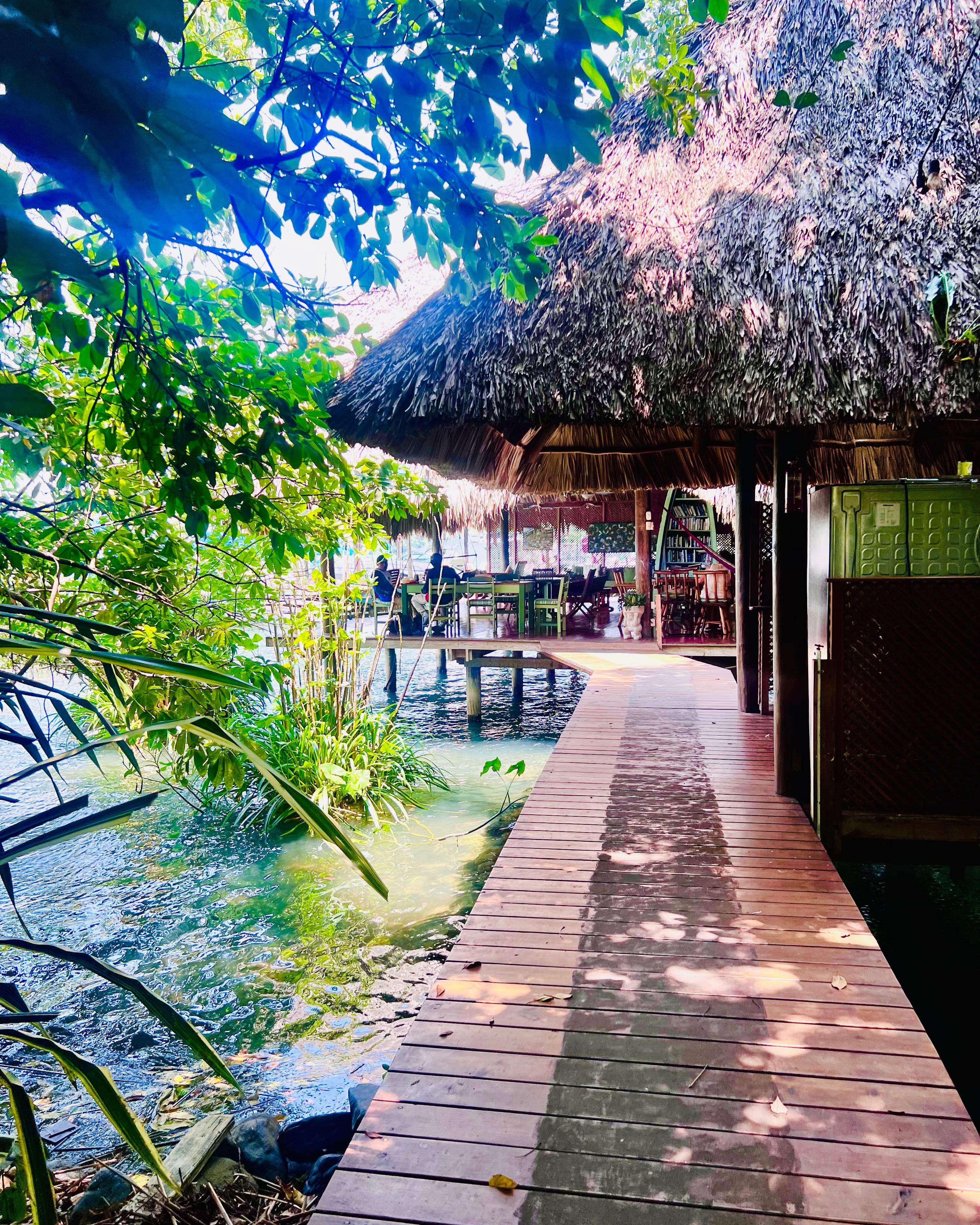
On Friday, as I was strolling along the wooden path at the marina lined with jungle canopy, I felt like we’d made enormous mistake parking ourselves here for so long.
I asked Corey, “What the hell are we doing?”
Yes, we have way more conveniences than we ever dreamed about at anchor. Endless warm showers. Easy trash disposal. Grocery boats that pull up to the dock, just steps from our floating home. An outdoor kitchen with — dios mios! — a working refrigerator.
And it’s only $275/month with wifi included.
But I’m still wondering about bigger questions, like what my life is all about.
The conveniences of marina life are supposed to be the scaffold for figuring out what to build next, & the truth is I don’t have clean answers yet.
In the past, my new moves have required experimenting with intriguing ideas until something becomes insanely exciting. I search out what people are doing who share my values & personality — not just my degree or job history. That’s how I found sailing. Then, I find those who are a few steps ahead of me & talk to them if possible.
Thankfully I can do all this from the marina. All I need is some wifi — plus, some time & patience.
Wu writes:
“Struggle is not always a problem. Sometimes struggle is a solution. It can be the solution to the question of who you are.”
Now I’m thinking back to 2024 for the actual reasons I signed up for sailing life. I feared the world was getting worse — that any sense of stability was only an illusion — & that I’d needed real resilience for whatever came next.
Looking at the world in 2026, I think I was right.
And even though some of the past 20 months have sucked while they were happening, from the North Carolina boatyard to the streets of the Rio Dulce, the fact that I have overcome each struggle has made me more optimistic that I’ll love whatever comes next.
I know I just gotta embrace the slower pace for a while & take a path that feels uncomfortable & inefficient. And I’ll be fine.
The marina is now a convenience I’m using toward that purpose. It’s a tool to become the next version of myself — even if I’m currently staring like a zombie in the mirror asking, “Who the hell are you?”
That's something I can't shortcut. And no so-called productivity expert can convince me otherwise.
Naval Ravikant — extremely wealthy & worshipped in online productivity circles — argues you should outsource anything that costs less than the aspirational hourly rate you assign yourself.4
“That even includes things like cooking. You may want to eat your healthy home cooked meals, but if you can outsource it, do that instead.”
His self-assigned rate is $5,000/hour.
But I read this & thought, what if I like cooking?
Not everything enjoyable needs to be delegated. And not everything meaningful can be — especially not at the average American's hourly rate of $32.
By Naval’s logic, people, places, & things only have value if they can be quantified with a super-high dollar sign.
The same thinking would say it was a no-brainer to push that button to become instantly fluent in Spanish — even if it cost $5,000 (& likely much more). But to me? That would mean outsourcing a journey that’s going to connect me more with people in the Rio Dulce as they laugh with me (& probably at me), and the confidence I’ll build as a result.
There’s an alternative to centering our lives around making as much money as possible. We decide the life we want first, then we start filling it with things that are interesting & exciting. The things we don’t love — perhaps cooking our own meals, or cranking an anchor by hand — we learn to love when they’re the price of a freer life. Then money becomes a tool to support that.
Wu said embracing inconvenience as a general rule can be perverse.
But meaning & purpose involves choosing the right struggles — the ones that give back more than they take.
We can’t shortcut it. We can’t outsource it.
On Friday, I felt like the most convenient move would be for us to sell the boat, go back to the U.S., & for me to find a “real job.”
I wanted to shortcut my temporary struggle with another convenience.
But the worst thing I could do right now is chase ease or give up on this journey. I would lose the thread of who I am becoming.
Yes, our blurry menus are still blurry. My Spanish is still horrible. And I’m still confused.
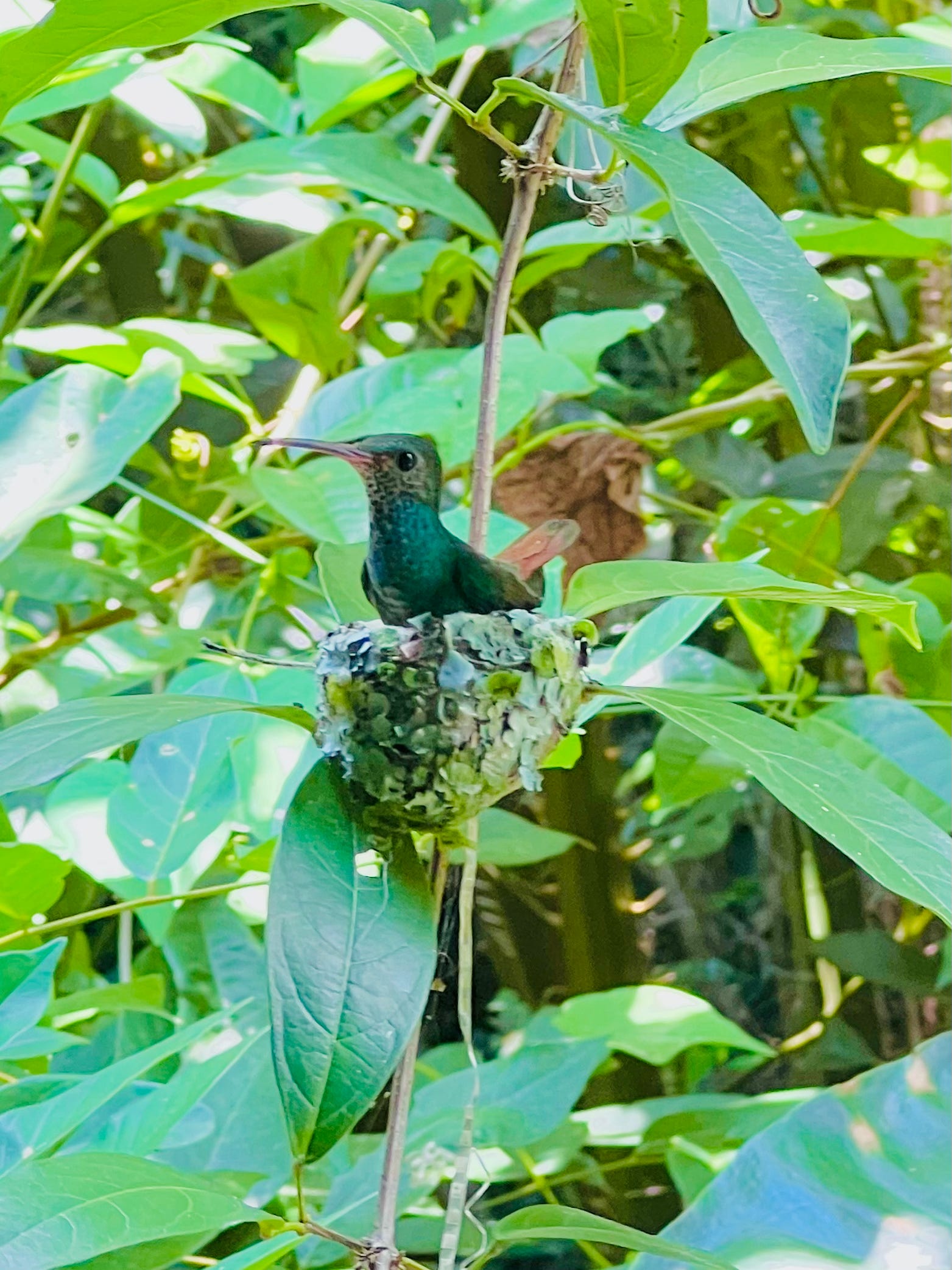
But a few hours after I chatted with Corey about wth we’re doing here, he sent me this video of monkeys he saw in the trees at the marina.
I realized: this is also the point of what we’re doing.
Last week, I managed to find those crispy quesadilla-looking things. Another street vendor had a menu that listed “tortillas de harina con queso fundido,” & I used my translator app on my iPhone to tell me that it’s basically a quesadilla. Corey wanted one too. So I said “¡Dos, por favor!” And they were speccccctacular.
The harder way is still the only way I know how to move forward, but I don’t need to always bang my head against the wall.
Some buttons, I'll push every time.
Radical Paths is 99% funded by subscriptions. I’m able to dedicate untold hours to this project because of my paying readers (thanks so much to all of you!). If you've been enjoying the journey & want to see where it goes next, consider upgrading for $5/month or $50/year.
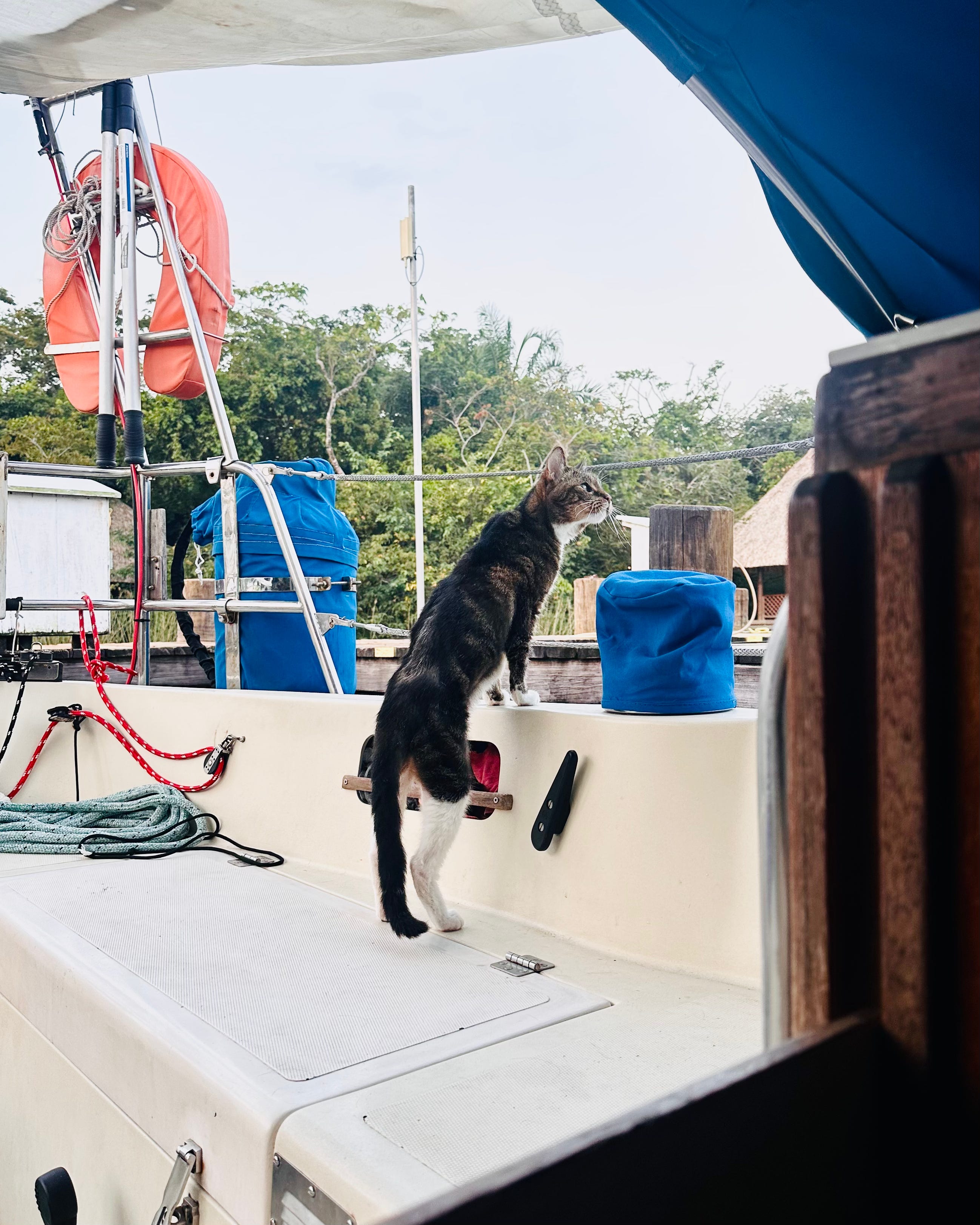
The gato had a busy week too:
If you’d like to chip in with a tip to support the adventure, every bit helps keep the boat floating & the story going. Thank you 🙏
Until next time,
—Cory

Tim Wu, “The Tyranny of Convenience,” NYTimes Opinion (2018). Tim Wu is a law professor at Columbia & author of The Attention Merchants. Highly recommend reading the full piece if you or someone you know is subscribed to the NYTimes.
"Beyond Work, Scroll, and Repeat: Cultivating Meaning and Purpose in Gen Z," Harvard Graduate School of Education (2023). This full report is worth reading.
“Freedom With a Side of Guilt: How Food Delivery Is Reshaping Mealtime,” NYTimes (2026). In the article, 1 woman said she spends $200-300/week on delivery from her $50k salary & admits, “I feel reliant upon it, but guilty for using it.”
Eric Jorgenson, The Almanack of Naval Ravikant: A Guide to Wealth and Happiness (2020). The full book is free at navalmanack.com. Worth reading to understand how a lot of people in tech & startup circles think about time, money, & value. I just happen to disagree with the premise that money should be the main focus of one’s work.
Some buttons I wouldn't push, but the language-speaking one? Yeah, I'd slam that button.
Because it's the journey and not so much the destination that actually matters.
Convenience is great if it allows me to focus my time and energy on the things I want to do- online shopping for groceries so I can spend more time on a passion sure; less so for substituting experiences that will enrich me as a person.
We humans like and need to have goals or plans to keep us interested. I think these goals or plans represent hope bc they keep us looking and moving forward.